Home charging is the single thing that makes an EV cheap to run — it’s the difference between paying the equivalent of $1.30-a-gallon gas and paying public-charging rates that rival the pump. But “set up home charging” covers everything from plugging into an existing wall outlet for free to a $4,000 electrical project. This guide breaks down the real 2026 costs, the Level 1 versus Level 2 decision, and how to avoid overpaying — so you can set up charging that actually delivers the savings an EV promises.
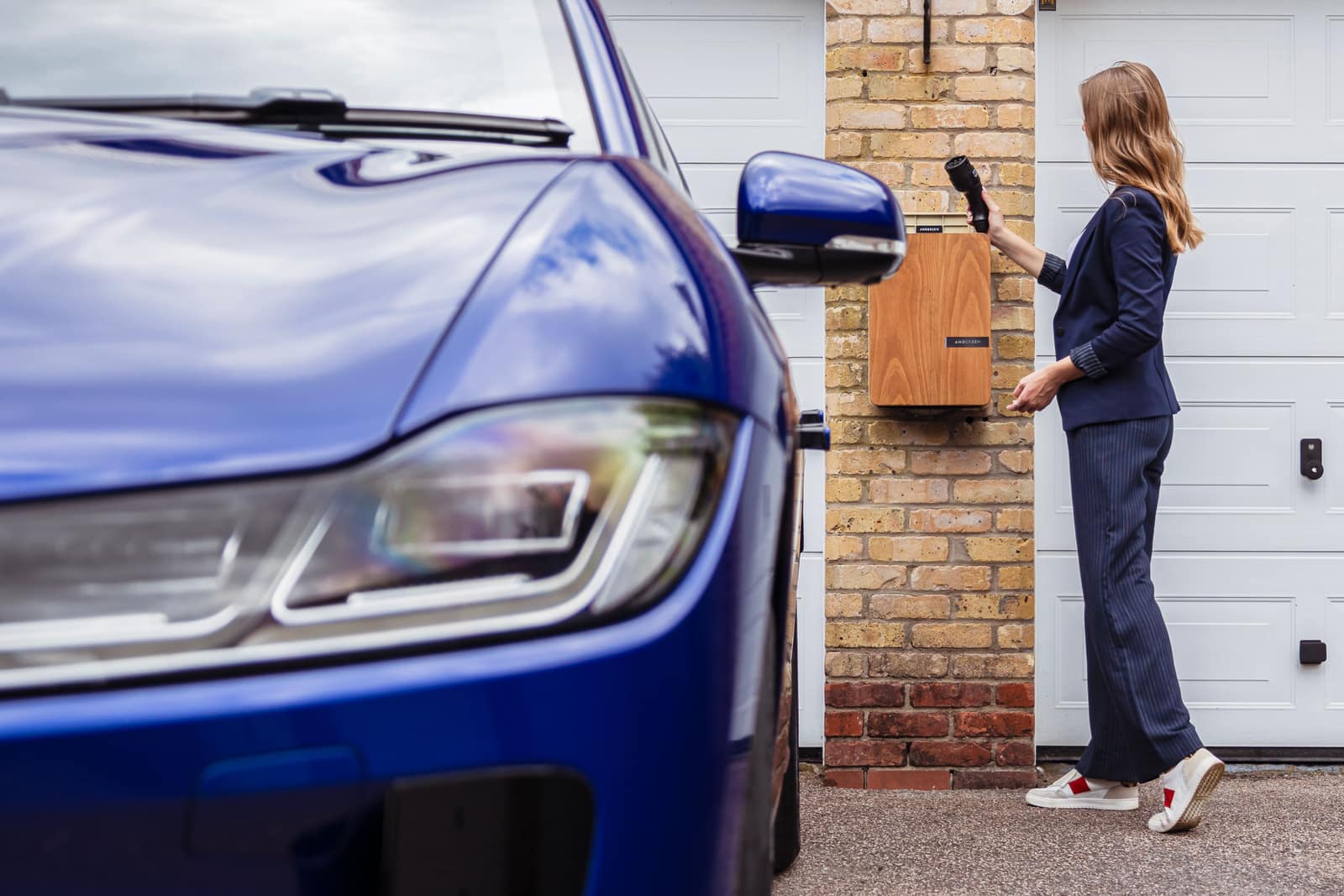
Level 1 vs Level 2: the core decision
Every home charging setup is one of two levels.
Level 1 uses a standard 120V household outlet — the charger that came with most EVs plugs straight in. It adds roughly 3–5 miles of range per hour. Cost: effectively free if you have an outlet near where you park. It’s genuinely adequate for plug-in hybrids and low-mileage drivers who plug in every night, but too slow for most full-EV drivers with regular mileage.
Level 2 uses a dedicated 240V circuit (like an electric dryer or oven) and adds about 25–44 miles of range per hour — enough to fully recharge most EVs overnight. This is what most EV owners install, and it’s where the cost and the decisions live.
Level 2 charger installation cost in 2026
Two parts: the hardware and the installation.
The charger itself runs roughly $200–$800 for a quality Level 2 unit. Well-regarded 2026 options span budget to smart: a basic reliable unit like the Grizzl-E Classic ($259), mid-tier smart chargers like the Emporia Smart ($429) or ChargePoint Home Flex ($699), and Tesla’s Wall Connector ($475) for Tesla owners wanting native app integration. For most mainstream EVs a 40–48A unit is the sweet spot — your car likely can’t use more amperage at home, so don’t overbuy.
Level 2 chargers are widely available from major retailers — compare features, amperage, and smart-charging support before committing to a unit.
The installation is where the price swings. Most US homeowners pay roughly $1,200–$3,000 for a professionally installed Level 2 charger in 2026, with the average full install around $2,100. A clean, short wire run near your electrical panel is the cheapest scenario (often under $1,500). The big cost multiplier is a panel upgrade: if your home needs a 100A-to-200A service upgrade to support the load, that alone adds $1,500–$4,000 and can roughly double the bill.
Finding a qualified installer
EV charger installation has become a scam-prone trade as demand surged, so vetting matters. The single most important step is verifying the electrician’s state license and active liability insurance — an unlicensed crew can void your homeowner’s insurance, and miscalculated wire gauge or breaker sizing is a real garage-fire risk. Insist on UL-listed hardware, a written load calculation before any panel-upgrade quote, and an itemized bid separating hardware, labor, permit, and inspection.
Certified installer networks can match you with vetted, licensed electricians and produce a clear quote up front — a useful path if you’d rather skip vetting individual contractors yourself.
The tax credit that’s about to expire
The federal Section 30C credit covers 30% of qualified home-charger installation cost, up to $1,000, for eligible residential locations (generally low-income or non-urban census tracts). Importantly, it is scheduled to expire June 30, 2026 under current law. If you qualify and you’re planning a setup, checking your address against the eligibility tool and installing before mid-year could meaningfully cut your net cost. Some states and utilities also offer rebates that can stack with the federal credit, and a few utilities run charger-leasing programs that eliminate upfront cost entirely in exchange for letting them manage charging during grid stress. Always check current programs — these change frequently.
How fast the setup pays back
The payback comes from charging at home instead of buying gas or paying public-charging rates. Public DC fast charging averages $0.25–$0.45 per kWh in 2026; home electricity averages about $0.16 per kWh. A driver covering ~300 miles a week can save $25–$55 a month by charging at home — paying back a ~$1,000 charger installation in roughly 18–40 months, then saving every month after. Add a time-of-use overnight rate and the savings grow further.
To see what home charging would save you specifically, run your mileage and electricity rate through the EV Savings Calculator.
Frequently asked questions
How much does it cost to install a Level 2 EV charger at home?
Most US homeowners pay roughly $1,200–$3,000 in 2026, averaging around $2,100. Simple installs near the panel can be under $1,500; jobs needing a panel upgrade can reach $4,000+.
Do I need a Level 2 charger, or is Level 1 enough?
Level 1 (standard outlet, 3–5 miles/hour) is fine for plug-in hybrids and low-mileage drivers. Most full-EV drivers with normal mileage want Level 2 (240V, 25–44 miles/hour) to recharge overnight.
Is there a tax credit for home EV charger installation?
Yes — the federal Section 30C credit covers 30% of installation cost up to $1,000 for eligible locations, but it’s scheduled to expire June 30, 2026. State and utility rebates may also apply.
What’s the best home EV charger in 2026?
Well-rated options include the Grizzl-E Classic (budget), Emporia Smart and ChargePoint Home Flex (mid-tier smart), and Tesla Wall Connector (Tesla owners). A 40–48A unit suits most mainstream EVs.
How long until a home charger pays for itself?
Charging at home instead of public fast charging saves a typical driver $25–$55 a month, paying back a ~$1,000 install in roughly 18–40 months — then saving every month after.
Set it up to actually save
Home charging is what turns an EV’s running-cost promise into real money. Pick the right level for your mileage, get a licensed installer and an itemized quote, and check the 30C credit before it expires. Run your specific savings in the EV Savings Calculator, and for the full ownership picture see our EV total cost of ownership guide.
Sources
- Recharged — home EV charger installation cost, 2026
- UseCalcPro / Angi — 2026 home Level 2 install median data
- IRS — Section 30C Alternative Fuel Vehicle Refueling Property Credit
- U.S. Energy Information Administration — January 2026 residential electricity rate
WATTSHIP intelligence is for reference and estimation. Installation costs vary by home, region, and electrical scope; confirm quotes and current incentives locally. See our Disclaimer.