Honda is one of the few companies that builds Formula 1 power units, motorcycles, lawnmowers, generators, and some of the most beloved cars ever made — and it started with a man bolting a surplus engine to a bicycle in the rubble of postwar Japan. The story of Honda is really the story of Soichiro Honda, a self-taught mechanic whose obsession with engines and refusal to compromise on engineering built a global company in a single lifetime.
- 1946Honda Technical Research InstituteSoichiro Honda founds the company in postwar Japan
- 1947A-Type bicycle engineSmall engine to attach to a bicycle — cheap motorised transport when cars were unaffordable
- 1948Honda Motor Co., Ltd. incorporatedThe business is formally registered
- 1949Dream D-Type — first complete motorcycleSoichiro meets Takeo Fujisawa — engineering + business partnership begins
- 1959American Honda established"You meet the nicest people on a Honda" — motorcycles open the US market
- 1963S500 — first production car (and T360 truck)15 years after incorporation, Honda finally builds a car
- 1964Honda enters Formula 1 as a constructorWins a Grand Prix the very next year (1965)
- 1972Civic launchedCVCC engine clears US emissions without a catalytic converter — Honda becomes a major automaker
In postwar Japan, transportation was scarce and fuel was rationed. In 1946, Soichiro founded the Honda Technical Research Institute, and in 1947 his team produced the A-Type: a small engine designed to be attached to a bicycle, giving ordinary people cheap, motorized transport when cars were out of reach. It sold because it solved a real problem. In 1948, the business was formally incorporated as Honda Motor Co., Ltd.
The partnership that built the company
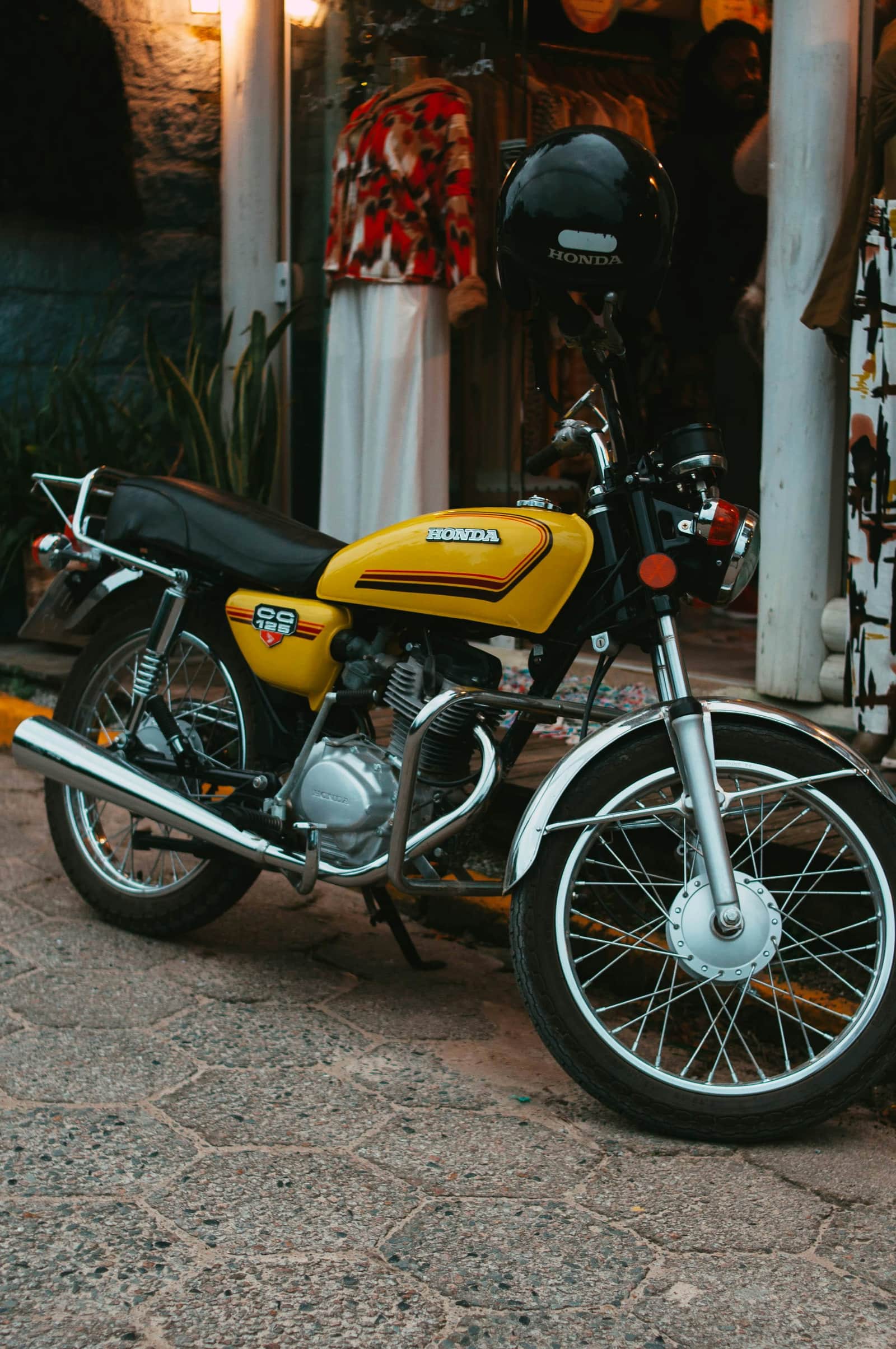
The turning point came in 1949, when Soichiro met Takeo Fujisawa. The division of labor was perfect: Soichiro obsessed over the product and the engineering; Fujisawa ran the business, the financing, and the sales strategy. It’s one of the most effective partnerships in industrial history — Honda the engineer was free to chase technical excellence precisely because Fujisawa handled the things that would have sunk a pure engineer’s company. The 1949 Dream D-Type was their first complete motorcycle, and Honda rapidly became a motorcycle powerhouse.
”You meet the nicest people on a Honda”
Honda’s American breakthrough came through motorcycles, not cars. American Honda was established in 1959, and rather than chase the leather-jacket biker image, Honda marketed small, friendly, approachable motorcycles to ordinary Americans — the legendary “You meet the nicest people on a Honda” campaign. It worked spectacularly, building the brand and the dealer network that cars would later use.
Cars, and the leap into Formula 1
Honda didn’t build its first production car until 1963 — the tiny S500 sports car and the T360 truck. For a company that started with bicycle engines, what came next was audacious: Honda entered Formula 1 in 1964, as a full constructor building its own chassis and engine, and won a Grand Prix in 1965 — an almost unthinkable feat for a company that hadn’t existed two decades earlier. F1 became Honda’s proving ground and a permanent part of its identity.
The engineering reputation translated to road cars. The CVCC engine of the early 1970s let Honda meet tough new US emissions rules without a catalytic converter — a genuine engineering coup. And in 1972, Honda launched the Civic, a small, efficient, brilliantly packaged car that arrived just as the oil crisis made fuel economy urgent. The Civic, and later the Accord, turned Honda from a motorcycle company into a major automaker.
The engineering DNA you can still feel
What makes Honda Honda is the engineering-first culture Soichiro built: high-revving engines, a love of motorsport, and a willingness to do things the hard, clever way. You feel it in the cars enthusiasts chase today — the VTEC engines, the Type R hot hatches, the NSX supercar, the S2000 roadster. These are cars built by a company that entered F1 because it could.
Many of the most coveted Honda enthusiast cars were JDM-only or came in higher-spec Japanese versions — which is exactly why they’re popular imports as they cross the 25-year line. An Integra Type R, a JDM Civic, an early NSX: same engineering heritage that started with a bicycle engine. If one’s on your list, see our guide to importing from Japan and check the JDM legends eligible to import.
Frequently asked questions
How did Honda start?
Honda began in postwar Japan when Soichiro Honda’s company produced a small engine (the A-Type, 1947) to attach to bicycles for cheap transport. The business was incorporated as Honda Motor Co. in 1948 and grew into a motorcycle, then automobile, powerhouse.
Who founded Honda?
Soichiro Honda, a self-taught mechanic and engineer, founded the company. His partnership with businessman Takeo Fujisawa — Honda on engineering, Fujisawa on business — was central to its success.
What was Honda’s first car?
The S500 sports car (and T360 truck) in 1963. Honda built motorcycles for years before making cars, and entered Formula 1 just a year after its first car.
When did Honda enter Formula 1?
Honda entered F1 as a constructor in 1964 and won a Grand Prix in 1965 — remarkably soon after building its first car, reflecting the company’s engineering-first culture.
Why are Honda cars popular with importers?
Many high-performance Hondas — Type R models, JDM-spec Civics and Integras, early NSX — were Japan-only or higher-spec in Japan. As they reach 25 years old, they become importable to the US, making them sought-after JDM imports.
From a bicycle to the grid
Honda’s arc — surplus engine on a bicycle to a Formula 1 constructor within twenty years — is one of the great engineering stories in industry. That obsession with doing engines right is still in every enthusiast Honda, and it’s why the JDM-spec ones are so wanted as they become legal to import. Explore the JDM legends list and how to bring one home in our import guide.
Sources
- Honda — corporate history
- Automotive Hall of Fame — Soichiro Honda honoree profile
- Honda Global — Formula 1 history and first win
- Public historical record of Honda Motor Co. founding and early models
WATTSHIP intelligence is for reference and historical context. Historical details are drawn from public corporate and historical records. See our Disclaimer.